


Pain Clinic |
F18
|
About Us
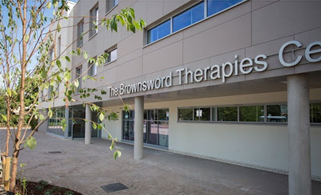
The RUH Pain Clinic is a secondary care outpatient service situated in the Brownsword Therapies Building F18 (first floor).
We provide multi-disciplinary care to Adult Chronic Pain Patients.
Why have you been referred to the Pain Clinic?
You have been referred to the Pain Clinic because you have persistent (chronic) pain that you are finding difficult to manage. We hope to help you manage your pain more effectively and reduce its impact on your quality of life.
Services
The aim of the service is to diagnose and treat chronic pain where it is possible and to help people move towards a self-management model that will improve their quality of life. It acts as a resource aiming to increase awareness of chronic pain throughout the Trust and wider health community.
The service works in line with the Trusts vision and values, national guidance and local commissioning requirements to deliver a bio-psychosocial model of pain management for adults with a range of chronic pain conditions.
More about services in the Pain Clinic
Contact us
Pain Clinic Royal United Hospitals Bath NHS Foundation Trust Combe Park Bath BA1 3NG
01225 824331
Please note that this email is not to be used for appointment enquiries or cancellations - these MUST be telephoned in or left as a message on the answerphone. Thank you.
Preparing for your appointment
Before your Appointment
Before your appointment, you'll receive a letter, email or text message from the hospital that includes everything you need to know about your appointment. You may be offered a face-to-face appointment, or a telephone or video appointment. You and your healthcare professional will agree the type of appointment you're offered, based on your needs and preferences. You’ll get the same quality of care no matter what type of appointment you have.
If you cannot attend your appointment at the time you've been given, please contact the Department. It may help to have your NHS number with you when you contact us.
We highly recommend looking up where the hospital and the department are and plan how you'll get here. It may be helpful to look up local transport or parking arrangements.
Find out more about how to organise transport to and from hospital
For video appointments you'll need a charged smartphone, tablet or computer with a camera, microphone and internet connection. Please test your equipment before your appointment.
For a telephone appointment, make sure you have provided your up-to-date telephone number. This could be your mobile or landline phone number. If you plan to use your mobile, check its battery is charged and you're somewhere you can get signal.
Preparing for your First Appointment
At your first appointment, the doctor will assess your pain and recommend a management plan. This plan will be tailored according to your needs and health condition, and it might involve further appointments with other specialists in the Pain Clinic if needed.
To prepare for this appointment please bring with you copies of any relevant letters, exams, list of current medicines prescribed by your GP and a list of questions to discuss goals like improving your function. Be ready for a physical exam, which may include testing reflexes, strength, and range of motion.
Key Preparation Steps:
- Document Pain History: Keep a pain diary noting pain levels, types (for example sharp or dull), and what makes it better or worse
- List of Medications: Bring a complete list of current medications, correct dosages, and supplements
- Compile Records: Bring reports for relevant MRIs, X-rays, or previous treatments
- Define Goals: Be prepared to discuss specific and realistic goals (for example "I want to be able to walk for 15 minutes" or "I want to be able to sleep through the night")
- Prepare your Questions: Write down questions to ensure you cover everything, as appointments can be fast paced
- Bring support if needed: Consider bringing someone with you, especially if you get anxious or nervous
On the Day
Remember to bring the details of your appointment with you.
When you arrive to the department, please register with the reception at the time you've been given. You may be asked to arrive slightly before your appointment time.
Allow plenty of time for your visit, especially if this is your first appointment. You may have to wait if the appointments overrun.
What to Expect
The Pain Consultant will ask you for a full history and will review the medications you have been using and the treatments you have tried in the past. The clinician will assess the impact that pain is currently having on your quality of life. This assessment will help the Pain Consultant to diagnose your condition and let you know the next steps in your pain management pathway.
- Comprehensive Assessment: Expect a 45-minute appointment with a Pain Consultant involving a review of your history and a physical examination
- Discussion on Next Steps: The Consultant may suggest further diagnostics, medication adjustments, or procedures like nerve blocks
- Interdisciplinary Team: You might be referred to the Pain Management team which includes the Psychologist and Physiotherapist Pain Specialists who will be able to work with you in the self-developing of pain coping strategies
During your appointment, share any information you've prepared with your doctor, nurse or other healthcare professional. Giving them this information and asking any questions you have will help you get the most out of your appointment.
After your Appointment
A couple of weeks after your appointment, you should get a letter with a summary of your consultation. The healthcare professional will describe what they discussed with you on the day and explain what the next steps are. If you do not understand the letter, contact the department or your GP.
If you need another appointment, you'll get a letter, text or email about this.
Patient Information Leaflets
Diagnostic Medial Branch Blocks
Facet Joint Radio-frequency Denervation
General Radio-frequency Denervation
How nature can benefit my health
Transcutaneous Nerve Stimulation (TENS)
There are lots of helpful resources that you can access before and after your treatment at the Pain Clinic. These can be helpful in understanding and managing chronic pain - including web and video resources.
Other Resources
Referral Information
Referral Process
You can be referred to the Pain Clinic by either by your GP or by a consultant based at the Royal United Hospitals Bath.
The service will require a referral letter detailing why you have been referred and a completed Pain Clinic Referral form. Without these documents the administration team will be unable to process the referral.
Referral letters and forms should be sent to: ruh-tr.painclinic@nhs.net